Introduction
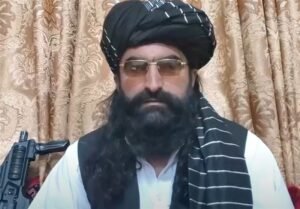
Noor Wali Mehsud, also known by his nom de guerre Abu Mansur Asim, was one of the most influential yet controversial figures in Pakistan’s militant landscape.
Born in South Waziristan on June 26, 1978, he rose through the ranks to become the fourth emir of Tehreek-i-Taliban Pakistan (TTP) in 2018.
His leadership marked a turning point for the group, as he attempted to reshape its image and revive its power.
However, his story ended violently in October 2025, when he was reportedly killed in a precision airstrike in Kabul, Afghanistan.
Early Life and Background

Noor Wali Mehsud was born in the rugged tribal area of Tiarza, South Waziristan, belonging to the Mechikhel sub-clan of the Mehsud tribe — a prominent Pashtun tribe with deep roots in the region.
He received his basic religious education at Madrisa Siddiqia Ospas and continued his studies at several madrasas in Faisalabad, Gujranwala, and Karachi.
These included Jamia Imdadia, Jamia Haleemia, and Jamia Ahsan-ul-Uloom, where he learned classical Islamic jurisprudence and theology.
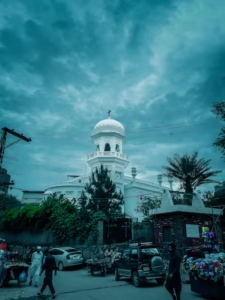
Around 1996–1997, Mehsud temporarily left his studies to join the Afghan Civil War, fighting alongside the Afghan Taliban against Ahmad Shah Massoud’s Northern Alliance. He took part in major battles, including those in Mazar-i-Sharif and northern Kabul.
https://zarintv.com/
Upon his father’s advice, he returned to Pakistan to complete his religious education and graduated in 1999, earning the title “Mufti” — a mark of his Islamic scholarship.
Path to Militancy
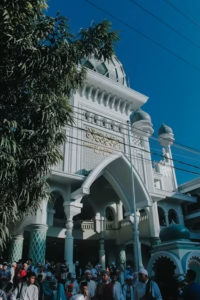
After completing his studies, Mehsud began teaching at Madrassa Imdad-ul-Uloom in Gurguray, South Waziristan.
However, by 2003, the political and militant situation in Pakistan’s tribal areas shifted dramatically.
The U.S. invasion of Afghanistan and rising anti-government sentiments among local tribes paved the way for the formation of the Mehsud Taliban faction, which Noor Wali joined.
This faction would later become part of the Tehreek-i-Taliban Pakistan (TTP) when it was formally established in 2007 under the leadership of Baitullah Mehsud.
Noor Wali quickly gained a reputation for his intelligence, religious authority, and organizational discipline — qualities that elevated him to the group’s inner circle.
Rise within the TTP
By 2013, Noor Wali Mehsud had become a key commander responsible for TTP operations in Karachi.
He managed a vast underground network involved in extortion, kidnappings, and militant financing, especially targeting wealthy Pashtuns and businessmen.
https://mashriqtv.pk/
He also introduced “Taliban courts” in Karachi’s Pashtun communities, forcing locals to settle disputes under his authority. Those who refused reportedly faced intimidation or violence.
Despite the Pakistani military’s counterterrorism operations, Mehsud maintained influence within the group, balancing both ideological and strategic leadership.
Becoming the Emir of TTP
In June 2018, following the death of Mullah Fazlullah in a U.S. drone strike, Noor Wali Mehsud was appointed as the fourth emir of the TTP.
At that time, the organization was facing severe internal divisions and had lost most of its territorial control in Pakistan. Many analysts considered TTP a “broken movement.”
However, Mehsud revitalized the group by changing its tactics and rhetoric.
He publicly declared that TTP would no longer target civilians, focusing instead on security and law enforcement agencies.
This move was seen as an attempt to rebrand the TTP and distinguish it from more extreme groups like Daesh–Khorasan (IS-K).
Under his leadership, the group began to regain operational strength. Reports suggested that the TTP grew “deadlier” and more organized between 2018 and 2023.
International Sanctions and Global Designation
On September 10, 2019, the United States designated Noor Wali Mehsud as a Specially Designated Global Terrorist (SDGT).
The United Nations Security Council followed suit in July 2020, listing him under the ISIL and Al-Qaeda Sanctions Committee.
These designations froze his assets, restricted his movement, and made him a high-priority target for global counterterrorism agencies.
Despite this, Mehsud continued to release statements and propaganda through TTP’s media wing, reaffirming the group’s mission to “defend Islam and Pashtun lands from foreign influence.”
The Reported Death in Kabul (October 2025)

On October 9, 2025, multiple Afghan and Pakistani sources reported that Noor Wali Mehsud had been killed in an airstrike in Kabul.
Residents near Abdulhaq Square in central Kabul described loud explosions late at night. While no group officially claimed responsibility, many believed it to be a targeted counterterrorism operation.
The Taliban’s spokesperson confirmed that an investigation was underway, though they did not disclose details about who carried out the attack.
This strike came at a politically sensitive time — during Afghan Foreign Minister Amir Khan Muttaqi’s visit to India — adding speculation about potential intelligence collaboration in the region.
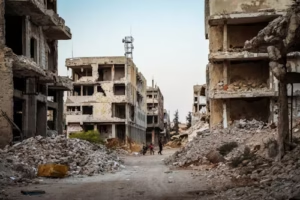
If confirmed, Mehsud’s death would mark another major blow to the TTP, which has historically struggled to maintain unified leadership.
Impact and Legacy
Noor Wali Mehsud will be remembered as one of the most tactically strategic yet deeply controversial militant leaders in Pakistan’s history.
He tried to reshape the TTP’s public image from a ruthless insurgent group to a “disciplined movement” focused on political and ideological goals — though his attempts were overshadowed by continued violence.
His death could again fragment the TTP’s internal hierarchy, as rival commanders vie for power. Analysts believe the group might face leadership struggles similar to those after Baitullah and Hakimullah Mehsud’s deaths.
My Opinion
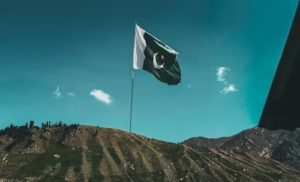
In my opinion, Noor Wali Mehsud’s era represented a transitional phase in Pakistan’s militant landscape. He was not just a field commander; he was a religiously trained strategist who understood both ideology and warfare.
While his approach softened the TTP’s rhetoric, his actions still resulted in countless tragedies that destabilized the region.
My Suggestion
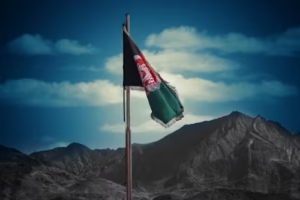
Pakistan and Afghanistan must take this opportunity to rethink their joint counterterrorism approach.
Both countries have suffered from extremist violence for decades, and with Mehsud’s reported death, it’s crucial to address the root causes — including education, border control, and militant financing networks.
Diplomatic collaboration, not blame-shifting, can bring lasting peace.
My Calculation
From 2018 to 2025, under Mehsud’s leadership, TTP attacks reportedly increased by nearly 40%, showing his ability to reorganize the movement.
However, international pressure and intelligence coordination made his survival increasingly difficult.
Statistically, most militant organizations lose operational efficiency after the death of a strong central leader — the same pattern may repeat for the TTP post-Mehsud.
My Experience / View
Over the years, following developments about Noor Wali Mehsud showed how individual ideology can reshape entire movements.
He demonstrated that even within extremism, there are attempts to legitimize or reorganize power — but violence always undermines such efforts.
From a broader lens, his death may not end militancy, but it weakens one of its major figures.
1 thought on “Noor Wali Mehsud: The Rise and Fall of the TTP Chief”