Scientists Reveal Alarming Effects of Using Mobile Phones in Bathrooms
using mobile phones in the bathroom
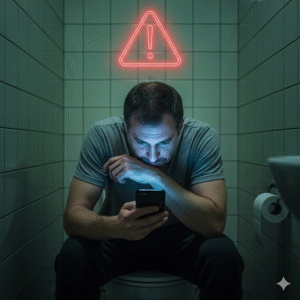
Most of us are guilty of it. Whether scrolling through social media, checking WhatsApp messages, or reading the news, using mobile phones in the bathroom has become a surprisingly common habit.
For many, it feels harmless—maybe even relaxing—but recent medical studies reveal that this behavior is far riskier than people think.
From raising the chances of painful hemorrhoids to spreading harmful germs, the dangers are real and worth understanding.
📱 The Rise of “Toilet Scrolling”using mobile phones in the bathroom
It’s easy to see why this habit has grown. Smartphones are designed to grab our attention and keep us entertained. A quick bathroom break can turn into 15 minutes of scrolling TikTok, Instagram, or news feeds.
using mobile phones in the bathroom
In fact, surveys show that nearly two-thirds of adults admit to using their phones on the toilet. For younger generations, the percentage is even higher.
What feels like a few seconds can easily stretch into several minutes—far longer than necessary for the body’s natural process.
🚽 How Phone Use Extends Toilet Time
using mobile phones in the bathroom
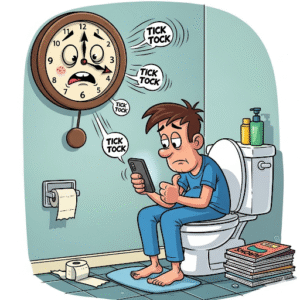
Medical experts emphasize that the problem isn’t the phone itself, but the time spent sitting.People without phones usually spend 3–5 minutes in the bathroom.
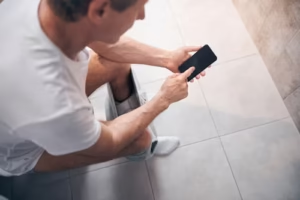
Phone users, however, often stay seated for 10–20 minutes or more.
The distraction of videos, posts, and chats makes it easy to lose track of time.
This extended sitting puts unnatural pressure on the rectum, which directly increases the risk of hemorrhoids.
⚠️ The Hidden Health Risks
using mobile phones in the bathroom
using mobile phones in the bathroom
Hemorrhoids are enlarged veins around the rectal region that may result in discomfort, irritation, and bleeding. Sitting on the toilet for longer periods encourages blood to gather in these veins, increasing the likelihood of painful episodes.
Recent findings from digestive health experts in the United States indicate that the main issue is not constipation, but extended time spent sitting.
Posture Problems
using mobile phones in the bathroom
When scrolling on a phone, many people hunch forward, putting additional strain on their lower back and pelvic floor.
This position makes bowel movements less smooth, forcing the body to work harder. Experts warn that the combination of poor posture and extended sitting is a recipe for long-term issues.
Bathrooms are full of germs and bacteria. Using a phone in such an environment increases the chance of contamination. Studies have found traces of E.
coli and other harmful microbes on devices used in bathrooms. Since we touch our phones constantly afterward, this creates a direct pathway for infections.
Recent studies from gastroenterologists in the United States highlight that the main problem isn’t constipation, but prolonged sitting.
Dr. Trisha Pasricha notes: “The more time you remain seated on the toilet, the more harmful it becomes.
Colorectal surgeon Dr. Hima Ghanta emphasizes that squatting is a more natural position compared to bending forward with a mobile phone.
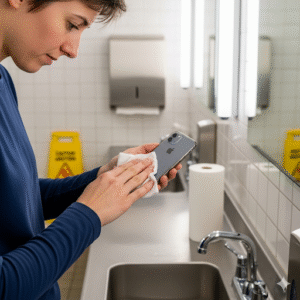
Train your mind to consider the bathroom a phone-free zone. If carrying your phone is unavoidable, make sure to clean it with a disinfectant afterward.
Dr. Sandhya Shukla adds that younger patients are now facing hemorrhoid issues, partly due to toilet scrolling combined with poor diet and lifestyle choices.
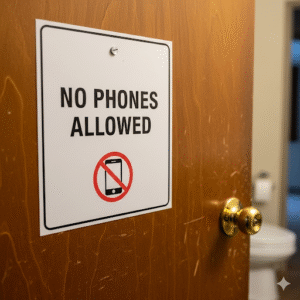
The simplest fix is the hardest: don’t bring your phone into the bathroom at all. Train your brain to see this space as a no-phone zone.
Limit Toilet Time
Doctors recommend no more than 5 minutes per bathroom visit. If nothing happens, stand up, walk around, and return later rather than forcing your body while distracted by a screen.
If self-control is tough, set a 3–5 minute timer. Once it rings, you know it’s time to leave, whether you’re done or not.
Replace the Habit
Some people find it helpful to replace phone scrolling with light reading, such as a small book or magazine—items that don’t lead to endless distractions.
🧼 Hygiene Safety Tips
If you must bring your phone, wipe it down with disinfectant afterward. Wash your hands thoroughly before and after use. Remember:
A phone that goes into the bathroom often comes out carrying bacteria you don’t want on your face, hands, or food.
🌍 The Bigger Picture
This issue highlights a broader concern: our dependence on smartphones. Even the bathroom, once the last refuge from constant notifications, is no longer phone-free. Breaking this cycle may improve not only our physical health but also our mental well-being.
🎯 Conclusion
At first glance, using mobile phones in the bathroom seems like a harmless modern habit. But science tells a different story.
From hemorrhoids and posture issues to hygiene risks and digital addiction, the consequences can be surprisingly serious.