Introduction
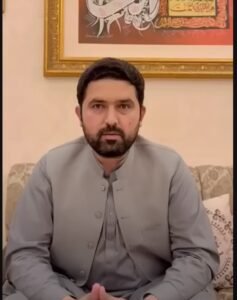
Pakistan’s political landscape has once again entered a tense phase following Imran Khan’s decision to nominate Sohail Afridi as the new Chief Minister of Khyber Pakhtunkhwa (KP).
The move has created intense political debate and renewed focus on the internal dynamics of Pakistan Tehreek-e-Insaf (PTI).
Afridi’s nomination highlights Imran Khan’s determination to place loyalists at the center of his political strategy. However, it also raises critical questions about governance, security, and the future of PTI’s relationship with the state’s powerful institutions.
Sohail Afridi’s Biography: Family, Education, and Personal Life
Sohail Afridi hails from the Khyber District of Khyber Pakhtunkhwa a region historically known for its resilience, tribal honor, and strong political identity.
Coming from a respected Afridi Pashtun family, Sohail grew up in an environment that valued courage, social service, and loyalty to the community.
His father was known locally for his involvement in social welfare and mediation of tribal disputes, giving Sohail early exposure to community leadership.
This background shaped his sense of justice and public service.

Education and Early Development
Sohail Afridi received his early education from Peshawar Public School, where he was recognized for his leadership and debating skills.
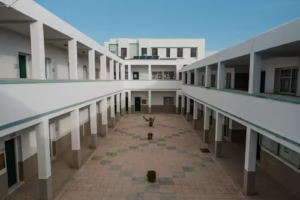
Later, he completed his Bachelor’s degree in Political Science from the University of Peshawar, followed by postgraduate studies focusing on Public Administration and Governance.
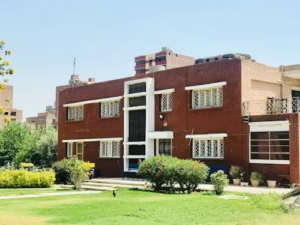
During his university years, Sohail developed a deep interest in national politics. He actively participated in student organizations that supported democratic governance and youth empowerment.
His education equipped him with a strong understanding of Pakistan’s bureaucratic and political systems — knowledge that later proved vital in his political career.
Personal Life and Character
Sohail Afridi is known for maintaining a simple and disciplined lifestyle. Colleagues describe him as passionate, assertive, and deeply loyal to Imran Khan’s vision of a “Naya Pakistan.”

Though not overly active on social media, Afridi remains a strong communicator in public forums and a popular figure among PTI’s youth base.

He is married and has children, and his family has largely stayed away from media attention. Friends often mention his preference for privacy and focus on administrative work over political showmanship.
His humility and strong moral code have earned him respect among PTI workers and local elders alike.
In private circles, Afridi is also known for his charitable contributions to schools and orphanages in the Khyber region, reflecting his commitment to uplift underprivileged communities.
How It Works: The Political Background
Imran Khan’s decision to nominate Sohail Afridi as Chief Minister of KP did not come out of nowhere.
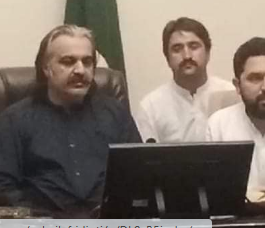
Afridi has been part of PTI’s inner political circles for several years, closely trained and mentored by Murad Saeed, a former federal minister and PTI stalwart.
Murad Saeed’s influence on Afridi’s political ideology is clear — both men share a strong nationalist perspective, skepticism toward traditional power structures, and deep loyalty to Imran Khan.
Sources close to PTI leadership confirm that Khan personally chose Afridi because of his “unshakable commitment” to party principles.
However, complications remain. The resignation of the outgoing Chief Minister Ali Amin Gandapur has yet to be formally accepted by the Governor, creating legal uncertainty.
Moreover, several PTI insiders privately admit that the political environment is not entirely favorable for Afridi’s smooth transition into power.
Political Reactions and Concerns

The announcement of Sohail Afridi’s nomination sparked immediate reaction across political and military circles.
Some federal officials warned that this move could reignite confrontation between PTI and the establishment.
A senior federal source noted, “Nominations are symbolic; votes are what truly count.” The comment reflects doubts over Afridi’s ability to secure the necessary majority in the provincial assembly amid intense behind-the-scenes maneuvering.

Adding to the tension, DG ISPR Lt Gen Ahmed Sharif Chaudhry indirectly addressed the issue in a recent press conference. Without naming PTI, he referred to a “political-criminal nexus” contributing to the recent surge in militancy in KP.
His remarks emphasized that political opportunism and misinformation campaigns were undermining counterterrorism efforts — a statement widely interpreted as a veiled warning to PTI.
Benefits and Drawbacks of Imran Khan’s Decision
From PTI’s viewpoint, Sohail Afridi’son nominatiis a refreshing step. He represents the younge formier, rst generation of PTI politicians who emphasize discipline, merit, and moral integrity.
His background as a grassroots leader from a tribal district adds credibility to PTI’s slogan of empowering ordinary citizens.
However, there are serious concerns. Afridi’s assertive political tone may deepen existing tensions with state institutions. Critics fear that if Afridi adopts a hardline stance similar to his mentors, it could alienate moderates and complicate security coordination in KP.
Furthermore, KP’s worsening law and order situation requires cooperation between provincial authorities and the military. A politically defiant approach might hinder crucial counterterrorism initiatives.
Political Analysis: What to Expect Next
Political experts suggest three possible outcomes:
-
Smooth Transition:
If Afridi manages to secure the Chief Minister’s post, PTI will reestablish full control over KP, reaffirming Imran Khan’s leadership grip despite his political challenges. -
Institutional Resistance:
If the establishment or Governor delays the process, KP could face a constitutional impasse, leading to administrative paralysis. -
Internal Division:
If Afridi’s appointment divides PTI legislators, it could weaken the party’s majority in the assembly — something that opposition forces might exploit.
Whatever happens, one thing is clear: the situation is no longer just about a political appointment — it’s a test of power between PTI and Pakistan’s state machinery.
My Opinion
In my view, the selection of Sohail Afridi as the Chief Minister nominee is both a strategic and emotional decision by Imran Khan.
On one hand, it reflects his loyalty-based political strategy; on the other, it risks pushing KP into further polarization.
Afridi’s background makes him an appealing figure for PTI supporters — educated, principled, and local to the region. Yet, his aggressive stance could invite institutional pushback. The challenge lies in translating his passion into practical governance.
My Suggestion
Imran Khan and his advisors should prioritize stability over symbolism. Instead of framing Afridi’s appointment as defiance, PTI should present it as a step toward administrative improvement.
Afridi, if appointed, should focus on improving education, police reforms, and employment generation — areas that matter most to KP’s citizens.
At the same time, Afridi must maintain open communication with the military and federal authorities.
Cooperation on security issues doesn’t mean surrendering autonomy — it’s about ensuring that governance remains effective and people-centric.
My Calculation
Based on current political dynamics, PTI holds enough numerical strength to get Afridi elected, but internal discipline is key. Even a small rebellion within the party could swing the results.
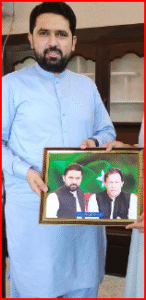
Realistically, there’s about a 65% chance of Afridi’s successful appointment, 25% chance of delay due to procedural or political interference, and 10% chance of a complete reversal if negotiations fail.
My Experience and View
Having observed Pakistani politics for decades, I’ve noticed that major appointments like these often serve dual purposes — part political statement, part governance strategy. Afridi’s case is no different.
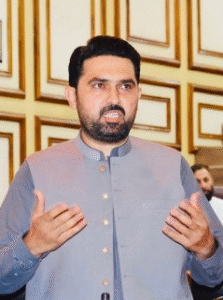
His personal background, education, and political training make him a capable administrator. However, without cooperation from state institutions, his effectiveness could be limited.
The key will be whether Afridi can balance loyalty to Imran Khan with pragmatic governance for KP’s people.
Conclusion

The nomination of Sohail Afridi Chief Minister Khyber Pakhtunkhwa is more than a political development — it’s a reflection of Pakistan’s ongoing struggle between civilian supremacy and institutional influence.
For Imran Khan, it’s a bold statement of defiance. For the establishment, it’s a test of patience. And for the people of KP, it’s a moment of uncertainty mixed with hope.
Sohail Afridi’s family background, education, and integrity make him a promising leader on paper. Yet, the path ahead is steep, filled with challenges of governance, security, and political resistance.
Whether this move strengthens PTI’s grip or deepens the divide will soon become clear — but one thing is certain: KP’s political future is again at the heart of Pakistan’s power game.
2 thoughts on “Sohail Afridi: Imran Khan’s Bold Choice for Chief Minister of Khyber Pakhtunkhwa — Rising Tensions and Political Uncertainty (2025)”